
Clean mineral title work is the process of proving who owns mineral rights, lease rights, royalty interests, and transfer history before an oil and gas acquisition closes. It is one of the quietest parts of a deal, but it often decides whether an asset is safe to buy or risky to hold.
Oil and gas acquisitions depend on more than acreage maps and production numbers. They depend on deeds, leases, probate records, tax records, assignments, and royalty calculations. If a document is missing or an ownership percentage is incorrect, the deal value can change quickly.
This guide explains what mineral title work is, why an unclear title creates risk, which defects buyers should watch for, and how buyers and sellers can reduce problems before closing.
What Is Mineral Title Work in Oil and Gas Acquisitions?
Mineral title work is a due diligence process that confirms who owns the mineral interest and who has the legal right to sell, lease, assign, or receive revenue from it. In an acquisition, it helps buyers confirm that the asset being purchased is real, transferable, and correctly valued.
This process usually includes reviewing deeds, oil and gas leases, assignments, probate records, tax records, court records, division orders, and prior title opinions. Each document helps connect legal ownership to the economic interest being sold.
For example, a seller may claim to own 100 net mineral acres. A title review may show that the seller owns only a smaller fractional share because the interest passed through several heirs. This is why organized mineral rights documentation matters early in the transaction.
What Does a Clean Mineral Title Prove?
A clean mineral title proves that the seller owns the stated mineral interest and has the authority to transfer it. It also confirms the size of the ownership interest, the lease status, the royalty burden, and any restrictions attached to the asset.
A clean title does not always mean a perfect title. It means the record is clear enough for buyers, lenders, land teams, and attorneys to understand the risk. If issues exist, identify them, resolve them, price them into the deal, or address them in the closing terms.
Surface Rights vs Mineral Rights
Surface rights are property rights that allow someone to use the land’s surface. Mineral rights are property rights that allow someone to own or benefit from underground resources such as oil and gas.
This difference matters because the surface owner may not own the minerals below the land. In an acquisition, the core value may come from the mineral estate, leasehold rights, or future production. Confusing the two can lead to valuation errors, access problems, and legal delays.
Why Does an Unclear Mineral Title Create Risk for Buyers?
Unclear mineral title creates risk because buyers cannot confidently know what they are purchasing. If ownership is uncertain, the buyer may overpay, inherit disputes, miss lease obligations, or face claims after closing.
The risk can be financial, legal, and operational. A missing heir can challenge ownership. A flawed deed can weaken the chain of title. An expired lease can remove development rights. A wrong legal description can place the asset outside the intended acreage.
This becomes more serious when a buyer is valuing future drilling locations rather than current production. If the buyer cannot prove ownership, it may struggle to drill, assign leases, pay royalties correctly, or secure financing against the asset.
What Are the Most Common Mineral Title Defects?
Mineral title defects are problems in the ownership record that make it difficult to confirm who legally controls a mineral interest. These defects matter because buyers value oil and gas assets based on ownership, lease control, royalty obligations, and future production potential.
Some defects are simple clerical issues. Others involve old conveyances, probate gaps, conflicting royalty claims, or missing legal records. Even a small defect can become expensive if it affects a producing well, pooled unit, or large acreage block.
Common mineral title defects include:
- Missing deeds or incomplete conveyance records create gaps in ownership history.
- Undisclosed heirs or probate issues that make transfer authority unclear.
- Conflicting royalty interests that affect revenue distribution.
- Old liens or unpaid taxes may attach to the asset.
- Lease expiration or unclear lease terms that weaken development rights.
- Incorrect legal descriptions that place the interest in the wrong tract.
- Gaps in the chain of title make it hard to prove ownership.
- Overlapping ownership claims that can trigger post-closing disputes.
How Does Clean Mineral Title Work Reduce Acquisition Risk?
Clean mineral title work protects deal value, builds buyer confidence, and reduces the risk of post-closing disputes. It turns scattered records into a reliable ownership picture that land, legal, finance, and operations teams can use.
The value is not only legal. Clean title supports better valuation. If the buyer knows the correct net mineral acres, royalty burden, lease status, and ownership percentage, the financial model becomes more accurate. If the buyer finds title defects early, they can cure them, adjust the price, request escrow, or change closing terms.
There are 6 main advantages of clean mineral title work:
- Protects purchase value by confirming the seller owns the interest being priced.
- Speeds up due diligence by reducing confusion between deeds, leases, and assignments.
- Improves deal confidence by giving buyers a clearer picture of ownership.
- Prevents post-closing disputes by resolving defects before payment.
- Clarifies royalty and lease obligations by connecting records to payment duties.
- Supports cleaner integration after acquisition by giving teams reliable land data.
How Should Buyers Review Mineral Title Before an Acquisition?
Buyers should review the mineral title by moving from asset identification to ownership verification, then to defect resolution before closing. The goal is to confirm the legal description, trace ownership, examine lease rights, calculate net mineral acres, and connect each finding to deal value.
There are 7 main steps in mineral title review:
- Confirm the legal description so the buyer knows which tract, section, unit, or acreage block is being reviewed.
- Trace the chain of title from the current owner through prior deeds, estates, assignments, and conveyances.
- Review deeds, assignments, and probate records to confirm each transfer was valid.
- Check lease status and royalty burdens to understand oil and gas leasing obligations.
- Identify liens, taxes, and encumbrances that may affect transfer or value.
- Verify net mineral acres and ownership percentages so the deal model matches the record.
- Resolve defects before closing through affidavits, releases, corrected instruments, curative documents, or purchase price adjustments.
Mineral Title Work vs Leasehold Due Diligence: What Is the Difference?
Mineral title work confirms ownership, while leasehold due diligence confirms the rights and duties created by oil and gas leases. The two processes are connected, but they answer different questions.
The mineral title asks who owns the minerals. Leasehold due diligence asks what rights the lessee or operator has under the lease. A buyer can have strong lease language but weak ownership support. It can also have clear ownership but unfavorable lease terms, assignment restrictions, depth limits, or royalty burdens.
| Factor | Mineral Title Work | Leasehold Due Diligence |
| Purpose | Confirms mineral ownership | Confirms lease rights and duties |
| Records Reviewed | Deeds, probate, tax records, title opinions | Leases, amendments, assignments, pooling records |
| Risk Reduced | Ownership disputes and incorrect interests | Lease expiration, royalty errors, operational limits |
| Deal Impact | Affects what is actually owned | Affects how the asset can be developed |
What Documents Matter Most in Mineral Title Review?
Mineral title documents are records used to prove ownership, establish transfer history, confirm lease status, and document financial obligations. These documents matter because the record must support every acquisition assumption.
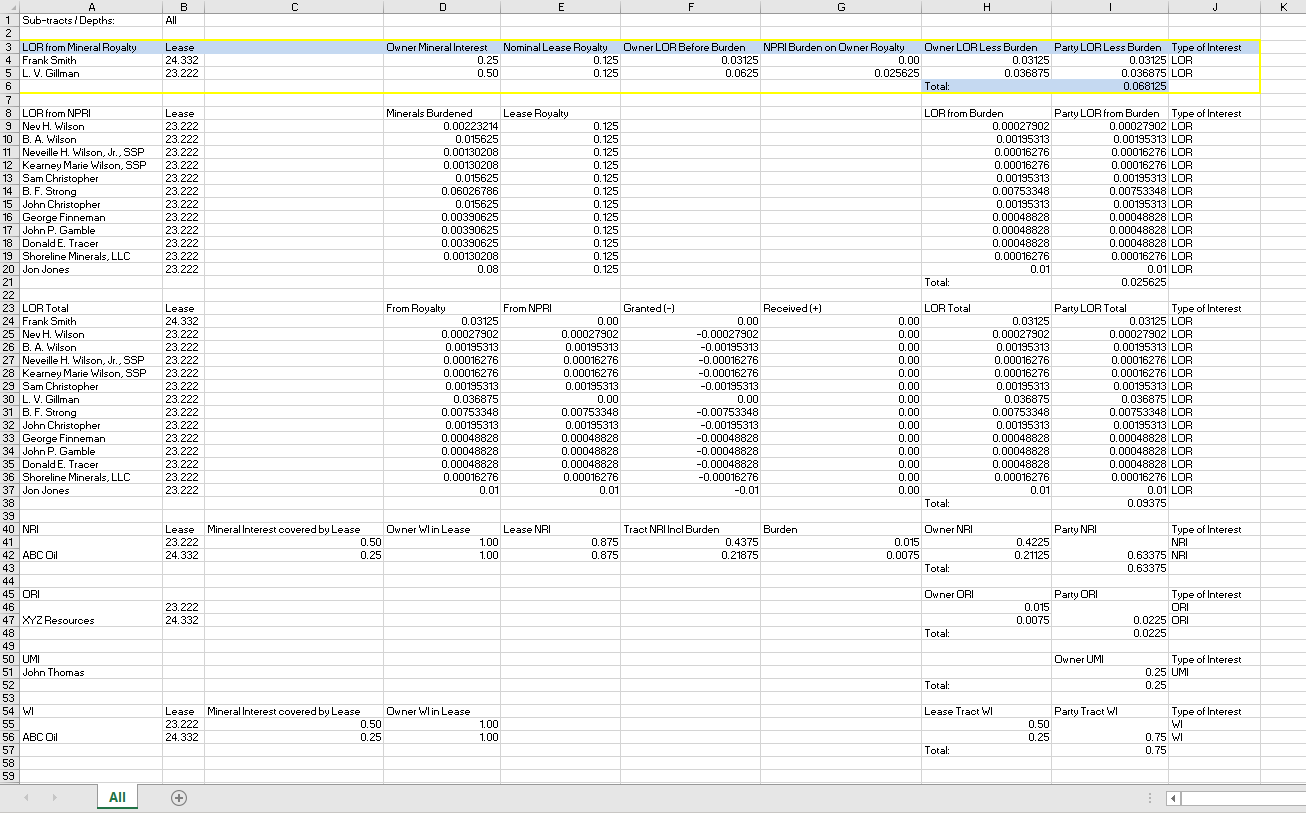
A seller’s spreadsheet may show ownership percentages, but the buyer still needs documents that prove those numbers. A division order may explain how revenues are being paid, but it does not replace the deed record.
Important title review documents include:
- Deeds and conveyances that show ownership transfer.
- Oil and gas leases that define royalty rates, terms, and obligations.
- Assignments that move leasehold or working interests between parties.
- Division orders that show production revenue distribution.
- Probate records that confirm inheritance and estate transfers.
- Tax records that may reveal liens or clues to ownership.
- Court records that may disclose disputes or quiet title actions.
- Curative documents that correct defects or clarify ownership.
What Role Do Digital Title Platforms Play in Reducing Acquisition Risk?
Digital title platforms are technologies that help organize, search, calculate, and manage mineral ownership records in a structured system. In oil and gas acquisitions, they help land teams move faster while reducing manual errors.
Instead of keeping deeds, calculations, maps, and notes across disconnected folders and spreadsheets, teams connect records to tracts, owners, interests, and workflows. This makes ownership history easier to search, review, and audit.
Digital tools can improve collaboration between land departments, attorneys, title analysts, and acquisition teams. Still, technology does not replace legal judgment. Experienced professionals must interpret difficult deeds, probate records, lease clauses, and conflicting claims.
What Mistakes Should Buyers Avoid During Mineral Title Review?
Buyers should avoid treating title review as a final checklist instead of a core risk-control process. Title findings can affect purchase price, escrow terms, closing conditions, indemnities, and even the decision to continue the deal.
There are 5 major mistakes buyers should avoid:
- Ignoring small ownership discrepancies that may multiply across units or wells.
- Relying only on seller-provided records without checking public records.
- Skipping probate or heirship checks when minerals passed through families.
- Failing to connect title findings to valuation and deal terms.
- Waiting too long to begin curative work can delay closing.
How Can Sellers Prepare a Cleaner Mineral Title Before a Deal?
Sellers can prepare a cleaner mineral title by organizing records, identifying defects early, and making buyer review easier before the asset goes to market. This preparation can shorten due diligence, reduce buyer skepticism, and protect deal value.
This is especially useful for owners considering why to sell mineral rights, how to transfer ownership of mineral rights, or how buyers may value future royalty income. A clean data room does not need to solve every problem in advance, but it should make the ownership story clear.
There are 5 useful seller preparation steps:
- Gather ownership records early, including deeds, leases, assignments, tax records, and prior title opinions.
- Organize leases and royalty documents so buyers can review terms and payment history.
- Fix obvious title gaps through affidavits, releases, probate updates, or corrected instruments.
- Confirm tax and lien status before buyer diligence begins.
- Prepare a clear data room with deeds, lease files, curative records, maps, and revenue documents.
Conclusion
Clean mineral title work protects buyers from uncertain ownership and helps sellers move through diligence with fewer delays. In oil and gas acquisitions, value is not created only by acreage, production, reserves, or drilling inventory. Value also depends on whether ownership can be proven clearly.
A strong title review confirms who owns the minerals, what leases control development, how royalties should be paid, and which defects must be cured before closing. Treat mineral title work as a risk-control tool, not a legal formality. Clean records protect the transaction and its economics.